
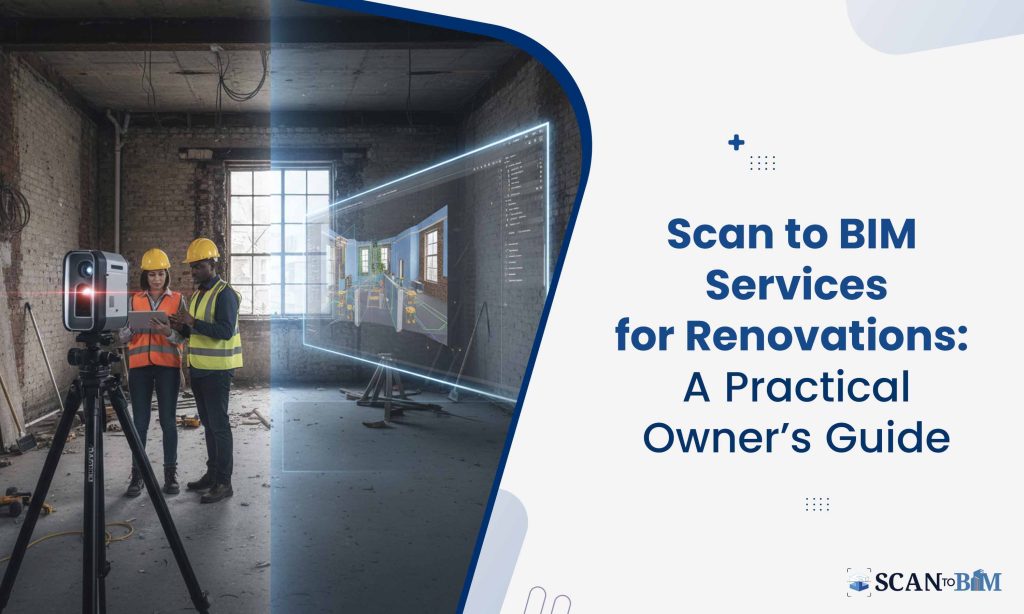
Renovation projects are inherently complex. Unlike any new construction, they rely heavily on the existing conditions—many of which are undocumented, outdated or simply inaccurate. Missing drawings, undocumented modifications and hidden structural or MEP elements often leads to the design clashes, reworks, delays and budget overruns.
This is where Scan to BIM has become a game-changer for the renovation and retrofit projects. For building owners, understanding how this process works—and what value it delivers—is critical to making the informed decisions before the design or construction begins.
Why Renovation Projects Fail Without Accurate Existing Data?
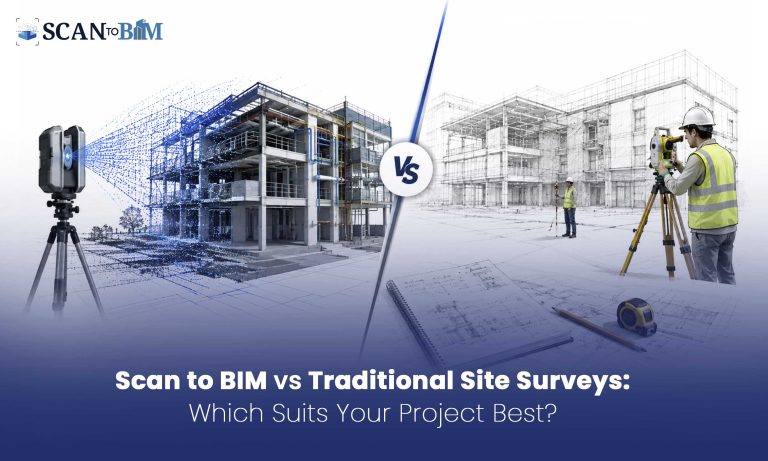
Most renovation challenges stem from one core issue: uncertain existing conditions. Traditional methods such as manual site measurements or relying on the legacy CAD drawings often falls short because:
- As-built drawings rarely reflects the current site reality
- Structural and MEP deviations accumulates over years of modifications
- Manual measurements are time-consuming and are quite prone to human errors
- Design teams work with the assumptions rather than verified data
These gaps lead to the clashes discovered too late, costly change orders and compromised design intent.
What Is Scan to BIM?
Scan to BIM is the process of capturing the physical reality of an existing building using laser scanning technology and converting that data into an intelligent 3D BIM model.
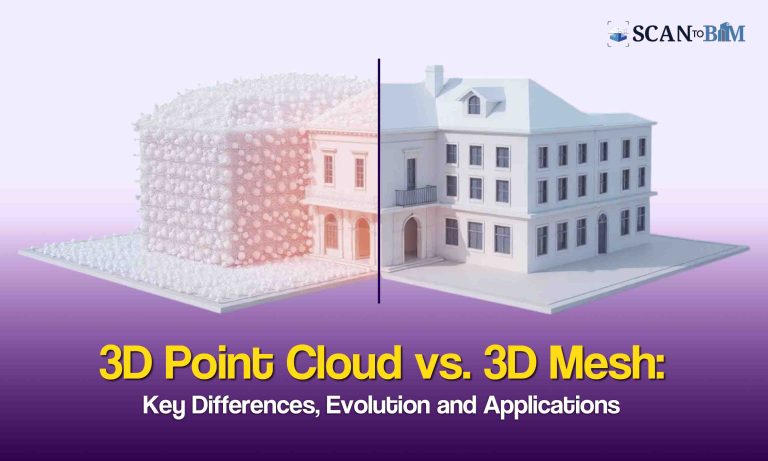
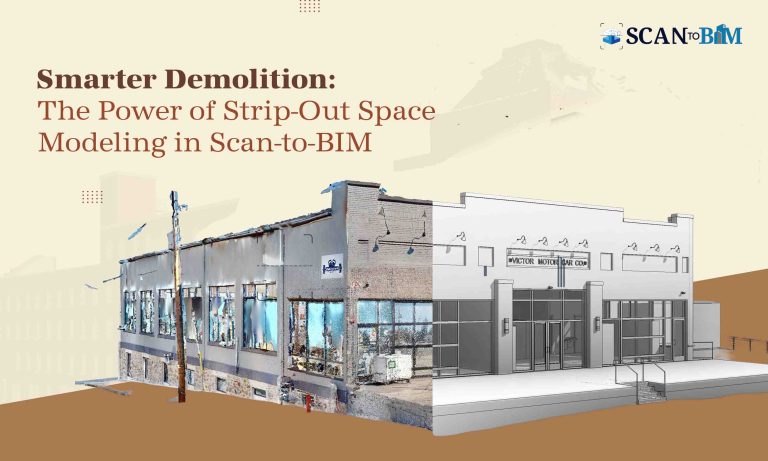
Laser scanners collect the millions of spatial data points—known as a point cloud—that accurately represents the geometry, levels, clearances and spatial relationships. This data is then translated into a structured BIM model that can be used by the architects, engineers, contractors and facility teams throughout the renovation lifecycle.
How Scan to BIM Adds Value in Renovation Projects?
- Precise Representation of the Actual Conditions
Scan to BIM eliminates the guesswork. Owners gains a verified digital twin of the building, reflecting the actual dimensions, slopes, penetrations and system layouts.
- Reduced Design Risk
Design teams work with reality, not assumptions. This significantly lowers the risk of design conflicts between the architecture, structure and MEP systems.
- Fewer Change Orders During Construction
When existing the conditions are known upfront, surprises on the site are minimized—resulting in fewer change requests and better cost control.
- Faster Decision-Making
With a BIM model, owners can visually assess the renovation impacts, phasing strategies and spatial constraints before the construction begins.
- Better Coordination Across Stakeholders
All consultants reference a single source of truth, improving the collaboration and reducing the misalignment between the disciplines.
Key Use Cases for Owners
Scan to BIM is particularly valuable for the renovation projects involving:
- Commercial office retrofits
- Healthcare facility upgrades
- Industrial plant renovations
- Heritage or brownfield buildings
- Mixed-use and residential refurbishments
For owners managing the portfolios, it also creates a reusable digital asset that supports the future renovations, expansions and facility management.
Understanding Point Clouds vs BIM Models
A common misconception is that point clouds alone are sufficient. While point clouds captures the raw spatial data, they are not design-ready or information-rich.
This is where the Point Cloud Conversion Services plays a critical role—transforming the unstructured scan data into discipline-specific BIM models with the defined geometry, levels and element classification suitable for the design, coordination and construction workflows.
What Level of Detail Should Owners Expect?
Owners should clearly define the required Level of Development (LOD) based on the project needs:
- LOD 200–300 for the general renovation planning and design coordination
- LOD 400 for fabrication-level detailing and construction execution
Higher detail means higher accuracy—but also higher modeling effort. Aligning LOD expectations early avoids the scope creep and unnecessary cost.
Opting for the Right Scan to BIM Partner
Not all service providers deliver the same outcomes. Owners should evaluate the partners based on:
- Experience with the renovation and retrofit projects
- Ability to model the architecture, structure and MEP from scans
- Clear QA/QC processes for model accuracy
- Alignment with the project LOD and deliverable standards
Engaging reliable Scan to BIM Services ensures that the scanned data becomes a usable, decision-ready model—not just a visual reference.
The Bottom Line for Building Owners
Renovation success starts long before the construction. Scan to BIM gives owners the clarity, confidence and control by replacing the assumptions with the measurable reality. It reduces the risks, improves the collaboration and protects the project budgets thus making it an essential foundation for modern renovation projects.
For owners planning upgrades, refurbishments, or adaptive reuse, Scan to BIM is no longer a “nice-to-have.” It is a strategic investment in accuracy, efficiency, and long-term asset value.